
How to Measure Drive Chain Wear?

Introduction
Drive chains are an essential component in many mechanical systems, from bicycles to industrial machinery. Over time, they can wear down and affect the performance of the system. In this article, we will discuss how to measure drive chain wear, the advantages of using drive chains, their working principle, how to choose the right drive chain for your application, and how to install them.
How to Measure Drive Chain Wear?
Drive chain wear can significantly affect the performance of your system. Therefore, it is essential to monitor the wear and replace the chain when necessary. Here are a few ways to measure drive chain wear:
1. Measure the Length
One way to measure chain wear is to measure the length. Over time, the chain will stretch, and measuring the length will give you an idea of how much wear has occurred. Using a caliper or ruler, measure the distance between two pins over sixteen links. A new chain will measure 12 inches, while a worn-out chain can measure up to 12 1/8 inches.
2. Check for Chain Elongation
Another method to measure chain wear is to check for chain elongation. Chain elongation occurs when the metal parts of the chain wear down, causing the distance between the pins to increase. To check for elongation, use a chain wear gauge, which will measure the wear in percentage. A wear percentage of over 0.75% indicates that the chain is worn out.
3. Check for Tooth Wear
Drive chains work in tandem with sprockets, and over time, both can wear down. Check for tooth wear by visually inspecting the sprockets for signs of wear or damage. If the sprockets are worn, it can affect the performance of the chain, leading to premature wear.
Advantages of Using Drive Chains
Drive chains offer several advantages over other methods of power transmission. Here are a few:
1. Durable and Long-lasting
Drive chains are incredibly durable and can last for a long time with proper maintenance. They can operate under extreme conditions and are resistant to wear and tear.
2. High Efficiency
Drive chains have a high transmission efficiency, meaning that they can transmit a large amount of power without loss. This makes them ideal for heavy-duty applications where efficiency is critical.
3. Low Maintenance
Drive chains require minimal maintenance compared to other power transmission methods. A well-lubricated chain can last for years without requiring replacement.
4. Versatile
Drive chains are incredibly versatile and can be used in a wide range of applications, from bicycles to industrial machinery. They can transmit power over long distances and can operate under different conditions.
5. Cost-effective
Drive chains are a cost-effective method of power transmission. They are affordable, durable, and require minimal maintenance, making them an excellent investment for many applications.
Working Principle of Drive Chains
Drive chains work by transmitting power from one sprocket to another. The chain wraps around the sprockets and is held in place by the teeth. As the first sprocket rotates, the chain moves along with it, transmitting power to the second sprocket, which then rotates.
How to Choose the Right Drive Chain for Your Application
Choosing the right drive chain for your application is essential for optimal performance. Here are a few factors to consider:
1. Load Capacity
Make sure to choose a chain with a load capacity that matches the requirements of your application. A chain that is too weak can break, while a chain that is too strong can add unnecessary weight and increase costs.
2. Speed
The speed of the application is another critical factor to consider when choosing a drive chain. Make sure to choose a chain that can handle the required speed without breaking or stretching.
3. Environment
The environment in which the drive chain operates is also crucial. Factors such as temperature, moisture, and debris can affect the performance of the chain.
4. Maintenance
Consider the maintenance requirements of the chain when selecting one. Some chains require regular lubrication or cleaning, while others are more low-maintenance.
5. Cost
Finally, consider the cost of the chain. While a high-quality chain may be more expensive upfront, it can save money in the long run by requiring less maintenance or replacement.

How to Install Drive Chains
Installing a drive chain is a relatively simple process. Here are a few steps:
1. Remove the Old Chain
Before installing a new chain, remove the old one. This can be done by loosening the tensioner and removing the master link.
2. Prepare the New Chain
Prepare the new chain by measuring it to the correct length and removing any excess links. Make sure to lubricate the chain before installation.
3. Install the Chain
Install the new chain by wrapping it around the sprockets and connecting the master link.
4. Adjust the Tension
Adjust the tension of the chain by loosening or tightening the tensioner until the chain has the correct tension.
About Our Company
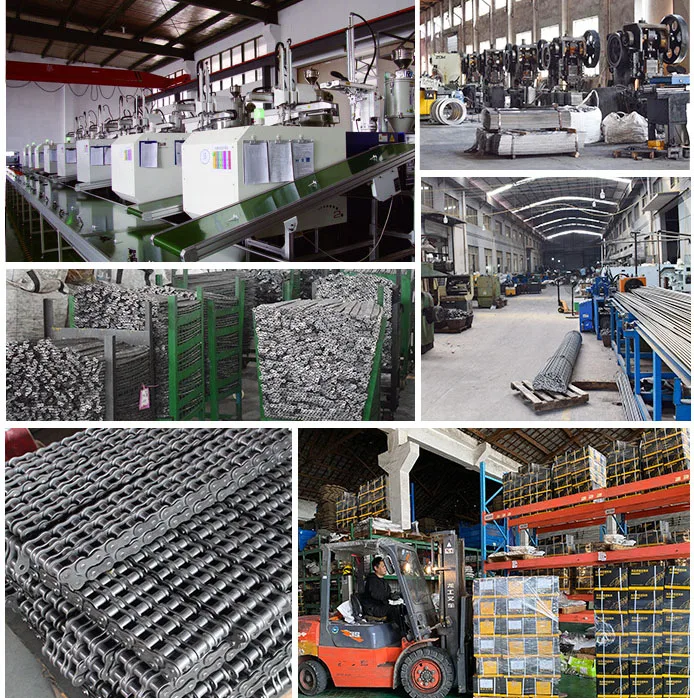
We are a comprehensive transmission equipment manufacturer specializing in the research and development, production, and sales of drive chains, industrial chains, plastic drag chains, motor chains, bush chains, plastic chains, drag chains, tabletop chains, multiflex-chains, flexible chains, and heavy-duty chains. With over 15 years of experience in the design, production, manufacturing, and sales of drive chains, we serve customers in Europe, America, Africa, Asia, and other regions, winning market praise. Our company has always adhered to the mission and vision of innovation and development, introduced advanced production and testing equipment, employed industry professionals for innovation, research, development, and manufacturing, used standardized production management to strictly control every link of the drive chain’s production, and has always provided customers with high-quality, high-efficiency, and high-stability production results.
Edited by Czh.