
Applications of Drive Chains in Rail Transport

Introduction
Drive chains play a crucial role in rail transport, enabling the efficient transfer of power and enabling the movement of trains. In this article, we will explore the various applications of drive chains in rail transport and discuss their advantages.
1. Train Propulsion
Drive chains are extensively used for train propulsion, converting the rotational motion of the locomotive’s engine into linear motion, allowing the train to move forward.
2. Track Switching Mechanism
Drive chains are also employed in track switching mechanisms, enabling the seamless transition of trains from one track to another. These chains ensure the smooth operation of track switches, ensuring safe and reliable rail transport.
3. Bogie Suspension Systems
Drive chains are utilized in bogie suspension systems, providing a stable and comfortable ride for passengers. These chains enable the effective distribution of weight and absorb shocks and vibrations, ensuring a smooth journey for passengers.
4. Pantograph Mechanism
Pantograph mechanisms, which enable the transfer of electricity from overhead lines to the train, also rely on drive chains. These chains ensure the reliable and efficient operation of the pantograph, facilitating uninterrupted power supply to the train.
5. Train Door Systems
Drive chains are employed in train door systems, allowing for the smooth opening and closing of doors. These chains ensure the secure and reliable operation of train doors, enhancing passenger safety and convenience.
Working Principle of Drive Chains
Drive chains consist of interconnected links that rotate around sprockets, transmitting power from one component to another. The links engage with the teeth of the sprockets, enabling the transfer of rotational motion and torque.
Choosing the Right Drive Chain for Rail Transport
When selecting a drive chain for rail transport, several factors need to be considered:
- Load Capacity: The drive chain should have sufficient load-bearing capacity to withstand the forces exerted during train operation.
- Corrosion Resistance: The chain should be corrosion-resistant to ensure durability and longevity, even in harsh environmental conditions.
- Low Noise Operation: It is essential to choose a drive chain that operates quietly, minimizing disturbance to passengers and surrounding areas.
- Efficiency: The drive chain should have high efficiency, ensuring minimal power loss during transmission.
- Maintenance Requirements: Consideration should be given to the maintenance requirements of the drive chain, aiming for easy maintenance and reduced downtime.

Installation of Drive Chains
The installation of drive chains in rail transport involves precise alignment, tension adjustment, and lubrication. Proper installation ensures optimal performance and longevity of the chains.
Promotion of Our Drive Chains
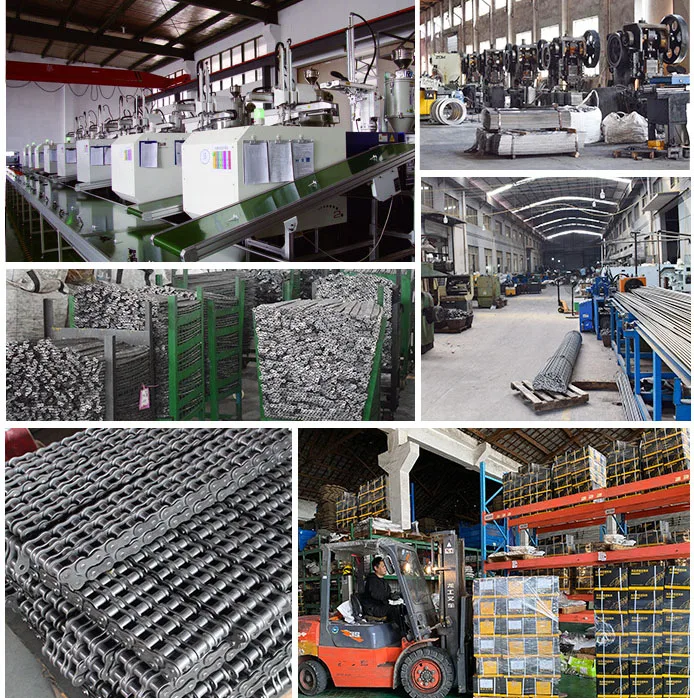
Our company specializes in the development, manufacturing, and sales of drive chains. With over 15 years of experience in the design, production, and manufacturing of drive chains, we have gained a reputation for providing high-quality products to customers worldwide.
Our drive chains are widely used in various industries, including automotive, manufacturing and industrial automation, agriculture, construction, mining, food and beverage, and textile industries. Customers appreciate our commitment to delivering the highest standards of service, product quality, and competitive prices.
Conclusion
Drive chains are essential components in rail transport, finding applications in train propulsion, track switching mechanisms, bogie suspension systems, pantograph mechanisms, and train door systems. They offer numerous advantages such as efficient power transmission, reliability, and durability. Choosing the right drive chain and ensuring proper installation are crucial for optimal performance. Our company takes pride in producing high-quality drive chains and serving customers worldwide with exceptional products and services.
Edited by Czh